Last Updated on January 9, 2026 by TM
The Redmi 15 enters the Nigerian smartphone market as a device clearly built around endurance, screen smoothness, and everyday reliability rather than raw performance bragging rights. In a market where power supply is inconsistent, mobile data is precious, and users often prioritize battery life over benchmark scores, Xiaomi’s approach with the Redmi 15 feels deliberate.
This phone is positioned for users who want a big, smooth display, exceptional battery longevity, and a modern Android experience, without paying flagship-level prices. From students and office workers to small business owners and content consumers, the Redmi 15 targets those who value consistency over cutting-edge specs.
With a massive 7,000mAh battery, a 144Hz display, Android 15 out of the box, and Xiaomi’s HyperOS 2.2, the Redmi 15 attempts to redefine what an “everyday phone” can look like in 2025 — especially for Nigerian conditions such as heat, extended power outages, and heavy social media usage.
Quick Summary
- Release date: August, 2025
- Nigerian price: Price begins at ($125) ₦187,000
- Who the phone is for: Everyday casual user

Redmi 15 Key Specs
- Display: 6.9 inches IPS LCD
- Dimension: 169.5 x 80.5 x 8.4mm
- Refresh rate: 144Hz
- Resolution: 1080 x 2340 pixels
- Battery Capacity: 7000mAh
- Fast Charging: 33W (Type-C)
- Reverse wired: 18W
- Processor: Qualcomm SM6375 Snapdragon 6s Gen 3 (6 nm)
- RAM: 4GB/6GB/8GB
- ROM: 128GB/256GB
- Rear Camera: 50MP
- Front Camera: 8MP
- Operating System: Android 15
- UI: HyperOS 2.2
- Weight: 217g
- IP Rating: IP64 Dust & Water Resistance
- Fingerprint: Side mounted
- Colors: sandy purple, titan gray, midnight black
Design & Build
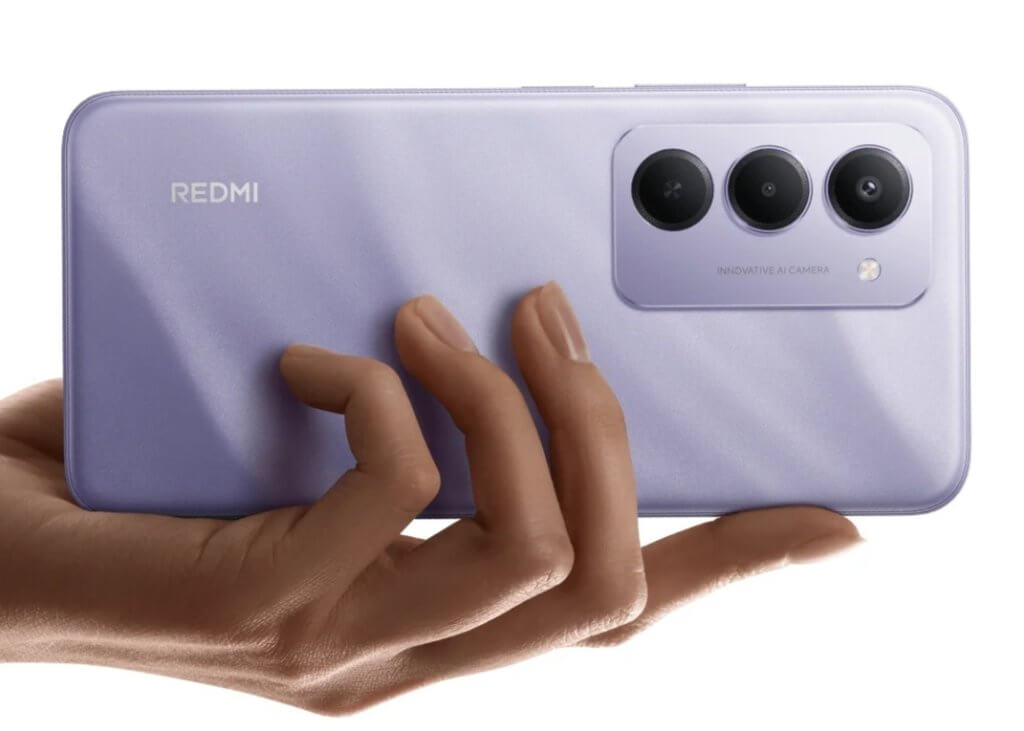
The Redmi 15 makes a strong first impression with a design that leans more premium than its price suggests. Despite housing a very large battery, the phone avoids feeling overly bulky thanks to its quad-curved back cover, which distributes weight evenly and allows it to sit naturally in the palm.
At 217 grams, the phone has a noticeable presence in the hand, but it never feels uncomfortable. The curved back and sculpted edges help reduce hand fatigue during long usage sessions — an important detail for Nigerian users who often spend extended hours on their phones due to power outages or limited access to alternative devices.
One standout feature is Wet Touch Technology 2.0. This allows the display to respond accurately even when fingers are wet, oily, or slightly dirty. In real-world Nigerian usage — rain, sweat, cooking, or outdoor activities — this feature adds genuine practicality rather than being just a marketing term.
The aluminium alloy camera decoration and refined sculpted accents give the Redmi 15 a modern, polished appearance. It doesn’t look or feel like a cheap device, and that matters for users who care about aesthetics as much as functionality.
Buttons and ports are well-placed, and the side-mounted fingerprint sensor feels natural to use, offering quick and reliable access without forcing awkward finger movements.
Display Quality
The Redmi 15 features a large 6.9-inch Full HD+ IPS LCD, making it ideal for content consumption. Whether you’re watching YouTube videos, scrolling through social media, reading articles, or attending online classes, the screen provides plenty of space and clarity.
The standout here is the 144Hz refresh rate, which is unusually high for this price category. Everyday interactions like scrolling, app switching, and menu navigation feel noticeably smoother. For users upgrading from older 60Hz or even 90Hz phones, the difference is immediately apparent.
The display also includes all-day eye-care features, helping reduce eye strain during prolonged use. This is particularly important in Nigeria, where many users rely heavily on their phones for work, learning, and entertainment late into the night.
While it is not an AMOLED panel, the IPS LCD still delivers sharp visuals, good color reproduction, and solid brightness for daily use. For most casual users, this display will feel immersive, responsive, and comfortable.
Performance
At the heart of the Redmi 15 is the Snapdragon 685, built on an efficient 6nm process. This chipset is designed for stability, efficiency, and consistent everyday performance rather than high-end gaming or intensive workloads.
For typical Nigerian usage — WhatsApp, Instagram, Facebook, YouTube, browsing, light multitasking, and productivity apps — the phone performs smoothly. Apps open reliably, navigation feels responsive, and background tasks are handled without excessive lag, especially on the higher RAM variants.
The phone also benefits from memory extension technology, allowing the 8GB RAM version to expand up to 16GB virtually. This helps keep more apps running smoothly in the background and improves multitasking consistency.
An interesting addition is the 200% volume boost, which significantly improves audio loudness. This is especially useful in noisy environments such as public transport, markets, or busy offices, where phone speakers often struggle.
Combined with IP64 dust and water resistance, the Redmi 15 feels built for daily stress and unpredictable conditions.
Gaming Performance
The Redmi 15 is not designed for high-end gaming at high graphics settings, and Xiaomi makes no attempt to present it otherwise. Heavy titles will require reduced graphics settings for smooth gameplay.
That said, casual and moderately demanding games can still be enjoyed, especially thanks to the smooth 144Hz display, which enhances visual fluidity even when graphics settings are toned down.
For Nigerian users who play games occasionally rather than competitively, the Redmi 15 delivers a satisfactory experience without overheating or excessive battery drain.
Camera
The Redmi 15 is equipped with a 50MP rear camera, which is capable of producing sharp and detailed photos in good lighting conditions. For everyday photography — capturing moments with friends, documenting events, or snapping quick shots for social media — the camera performs adequately.
Features like auto night mode, dynamic shots, and selfie beauty mode are available, helping users get usable images without manual adjustments. However, expectations should be kept realistic.
The camera performance is not outstanding, and users should not expect flagship-level results. Low-light photography and detailed processing are limited, and the phone is clearly not targeted at photography enthusiasts.
The 8MP front camera is suitable for video calls, selfies, and casual content sharing, but again, it prioritizes functionality over creative flexibility.
Battery Life & Charging
Battery life is one of the Redmi 15’s strongest selling points. It comes with a massive 7,000mAh battery that can comfortably deliver up to two full days of use under normal conditions, making it ideal for users who rely heavily on their phones and cannot charge frequently.
This is a major advantage in Nigeria, where power supply can be inconsistent. The phone is rated for up to 46 hours of call time and around 29 hours of reading, clearly prioritizing long-lasting endurance over short bursts of performance.
The Redmi 15 also features 1% power endurance, allowing the device to remain on standby even at extremely low battery levels, so users can still make or receive calls during emergencies. Its silicon-carbon anode battery technology improves long-term durability, with the battery retaining 80% or more of its capacity even after 1,600 charging cycles.
Charging is handled via 33W turbo charging, which balances speed and battery health, while 18W reverse wired charging lets the phone double as a power bank when needed.
Software & Features
The Redmi 15 runs Android 15 with Xiaomi HyperOS 2.2, delivering a modern and streamlined software experience. The interface feels responsive, visually clean, and optimized for smooth daily use.
One highlight is integration with Google’s Gemini AI assistant, which helps with writing, brainstorming, learning, and idea generation. This adds real value for students, professionals, and creatives.
Xiaomi Interconnectivity features also enhance usability, allowing smoother interaction within the Xiaomi ecosystem. An IR Blaster is included, enabling the phone to control compatible electronics — a feature that remains popular in Nigerian homes.
Network + Nigerian Relevance
The Redmi 15 supports 4G connectivity, which aligns well with Nigeria’s current network infrastructure. Since 4G LTE remains the most widely available and reliable mobile network across the country, this ensures consistent performance for calls, streaming, and browsing.
For users outside major cities, 4G support is often more practical than emerging technologies, making the Redmi 15 suitable for both urban and semi-urban environments.
Pros & Cons
Pros
- Premium-looking design
- Impressive battery life
- 144Hz refresh rate at this price point
- Wet Touch Technology 2.0
Cons
- Not suitable for high-end gaming
- No headphone jack
-
Heavy weight (217g)
Redmi 15 Best Alternatives in the Same Price Range
In this price bracket, users may also consider:
-
Samsung Galaxy A17
-
Tecno Spark 40
-
Samsung Galaxy A07
Each alternative targets slightly different priorities, such as brand preference, camera tuning, or software familiarity.
Final Thoughts
The Redmi 15 is a phone built for reliability, endurance, and smooth everyday usage rather than raw power. Its massive battery, high refresh rate display, modern software, and thoughtful features make it especially appealing for Nigerian users dealing with power instability and long daily phone usage.
It is not a gaming powerhouse or camera-focused device, but it doesn’t try to be. Instead, it excels where it matters most for its target audience: battery life, smooth performance, and long-term usability.
For everyday users looking for a dependable smartphone that can comfortably last two days on a single charge, the Redmi 15 stands out as a compelling option.

We do prime tech reviews for spec buy on day one.